
 English
 Français
 Deutsch
 Español
 Italiano
 Português
 日本語
日本語 한국어
한국어 Русский
 Home
Home



Durable Railway Pad for Improved Vibration Damping and Longevity
Core function Mechanical transfer and buffering The railway pad, as a key force transmission component between the rail
Send your inquiryDESCRIPTION
Basic Info.
| Customized | Railway Tools |
| Certification | ISO9001 |
| Type | Railway Tools |
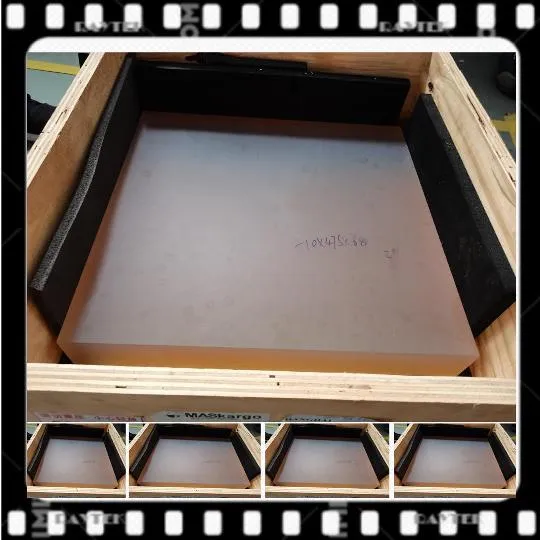
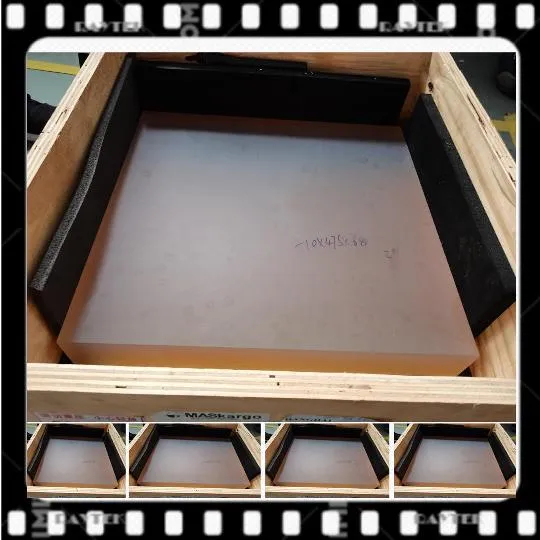
| Transport Package | Export Wooden Box |
| Origin | Handan, Hebei Province, China |
| Production Capacity | 10000 |
Product Description


Core function
Mechanical transfer and buffering
The railway pad, as a key force transmission component between the rail and the sleeper, can effectively disperse the contact pressure between the wheel-rail. Measured data show that the standard type pad can reduce the concentrated load on the rail head by 40-50%, keeping the pressure borne by the sleeper within a safe range of 3-5 mpa.
2. Vibration energy management
Due to the viscoelastic properties of polymer materials, rubber pads can absorb approximately 30% of the wheel-rail impact energy. In the application of high-speed railways, the combination with the double-layer vibration damping structure can reduce the vibration acceleration of the track by more than 15dB.
3. Orbital geometric adjustment
Pad plates of different thickness specifications (2-12mm) can achieve fine-tuning of the rail surface elevation. Combined with wedge-shaped pad plates (slope 1:40), it can effectively correct the horizontal deviation of the track with an accuracy of ±0.3mm.
Application scenarios
1. High-speed railway system
Adopt low-stiffness pads (static stiffness 40-60kN/mm)
The dynamic stiffness change rate is required to be ≤15%
Polyurethane-based composite pads are used in lines such as the Beijing-Tianjin Intercity Railway, with a service life of 8 to 10 years
2. Heavy-duty transportation routes
High-load-bearing pad (compressive strength ≥25MPa)
The special pad for the Daqin Line contains a steel fiber reinforced layer
Wear resistance index: The thickness loss after a 200Mt throughput is less than 1mm
3. Urban rail transit
Fireproof pad (oxygen index ≥32%)
The pads used in subway tunnels must pass the EN45545-2 fire protection certification
The Shanghai Metro Line 14 adopts ceramicized silicone rubber pads
Special environment application
High-cold pad: Maintains elasticity at -60ºC (Harbin-Dalian High-Speed Railway)
Oil-resistant gasket: The expansion rate of ASTM No.1 oil is less than 5%
Conductive pad: Volume resistivity 10³-10Ω·cm
Technological evolution trend
1. Intelligent monitoring type pad
Embed the FBG optical fiber sensor to monitor the pressure distribution in real time
The trial plate of the Beijing-Xiong 'an Intercity Railway integrates dual parameter monitoring of temperature and strain
2. Innovation in environmentally friendly materials
The content of recycled rubber has been raised to 50% (EU TRIZ standard).
Bio-based polyurethane pad (carbon footprint reduced by 35%)
3. Functional integration development
Damp-vibration isolation integrated pad (insertion loss ≥25dB)
Three-dimensional microporous structure pad (adjustable stiffness range ±20%)
Related Products